
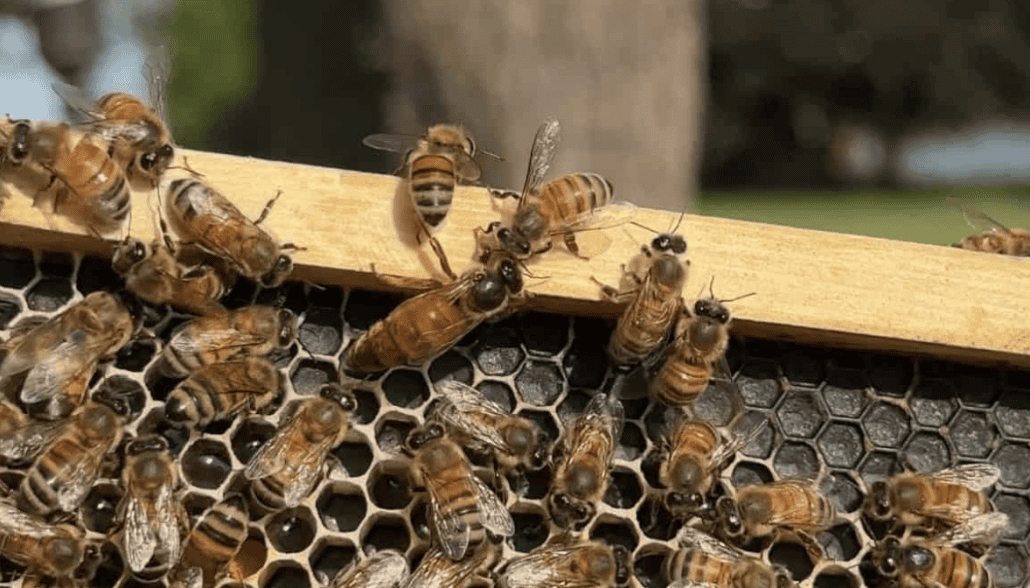
Life on Earth Continues Because of Honeybees
Honeybees (Apis mellifera) are the unsung heroes of our planet. Their tireless work as pollinators sustains a huge portion of global biodiversity and the very food chain that keeps us alive.
Why are they so essential?
- Crop pollination: Honeybees pollinate roughly 35% of the world’s food crops, accounting for about one in every three bites of food we eat. Fruits like apples, almonds, cherries, blueberries, avocados, and many more rely heavily on them—some crops depend on bees for up to 90% of their pollination. Without honeybees, these foods would become scarce, far more expensive, or even vanish from our tables.
- Natural ecosystems: They pollinate around 90% of wild flowering plants, ensuring the reproduction of vegetation that provides food, habitat, and oxygen for countless wildlife species—from birds and butterflies to deer and bears. This forms the foundation of healthy ecosystems worldwide.
- Economic impact: Bee pollination adds over $200 billion annually to global agriculture. In the U.S. alone, it’s valued at around $15–20 billion each year.
The bigger picture
Beyond honey production, honeybees are a keystone species: remove them, and vast parts of the web of life would collapse. They’ve co-evolved with flowering plants for millions of years, creating a beautiful symbiotic relationship that makes terrestrial life as abundant as it is today.
Unfortunately, honeybee populations have faced serious threats in recent decades—pesticides (especially neonicotinoids), habitat loss, parasites like Varroa mites, diseases, and climate change. Supporting mindful, sustainable beekeeping (like low-stress, chemical-free practices) helps protect these vital pollinators for future generations.
Every jar of raw, ethically produced honey is a small tribute to the incredible work of honeybees—and a reminder of how much we all depend on them. 🐝

Leave a Reply
Want to join the discussion?Feel free to contribute!